
Post No. 7 | In the Dark: An Adolescent Field Study
It's widely known that the best stories are based on well-defined thresholds — and their violation. When the hero faces inescapable danger, intolerable pain, or the deepest sadness, the storyteller crafts a threshold and a way for the hero to persevere, then subjects the poor soul to an even grimmer situation. At each step, the author violates the tolerance previously established, creating tension pointed towards the end. And as the reader, our job is to continue asking, "Why is this happening to so-and-so?"
This is not one of those stories.
Being the author, and non-hero of this particular story, I’ll admit up front that I did not "rise to the occasion" or "triumphantly persevere." There are no goals achieved, no wizards met, and no peasants delivered from local bandits. There is no glorious climax, save the one which is purely of a sexual nature. Thresholds are washed out like handfuls of sand in the waves. The subject (myself) is left with fewer feathers in his cap, more questions than answers, and a startling loss of blood.
Let's start at the beginning, which is often a good place to start a story.
•
To save on extraneous details at the beginning, I will simply say that as an adolescent I was recruited by my parents to relocate to Nairobi, Kenya. I enrolled in a private school and set about bumbling my way through the overly privileged, often undignified life of an expatriate. I loved it.
For one week every year, my classmates and I were joyously carted out to various towns and villages throughout the country on a short-term exchange student program called Cultural Field Studies. Looking back on it now, it's unclear what the families my classmates stayed with received in "exchange," except source material for a year's worth of chuckles.
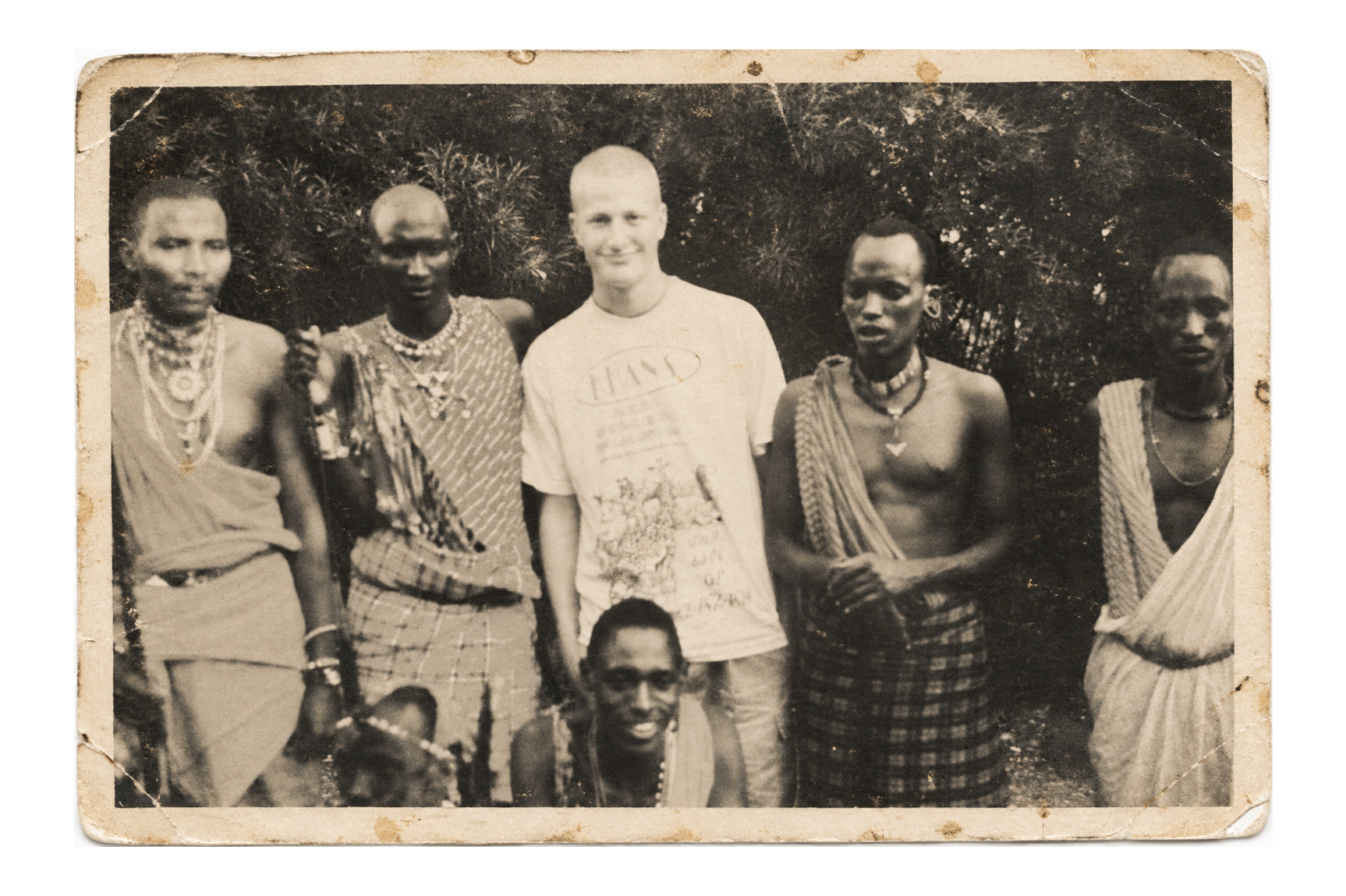
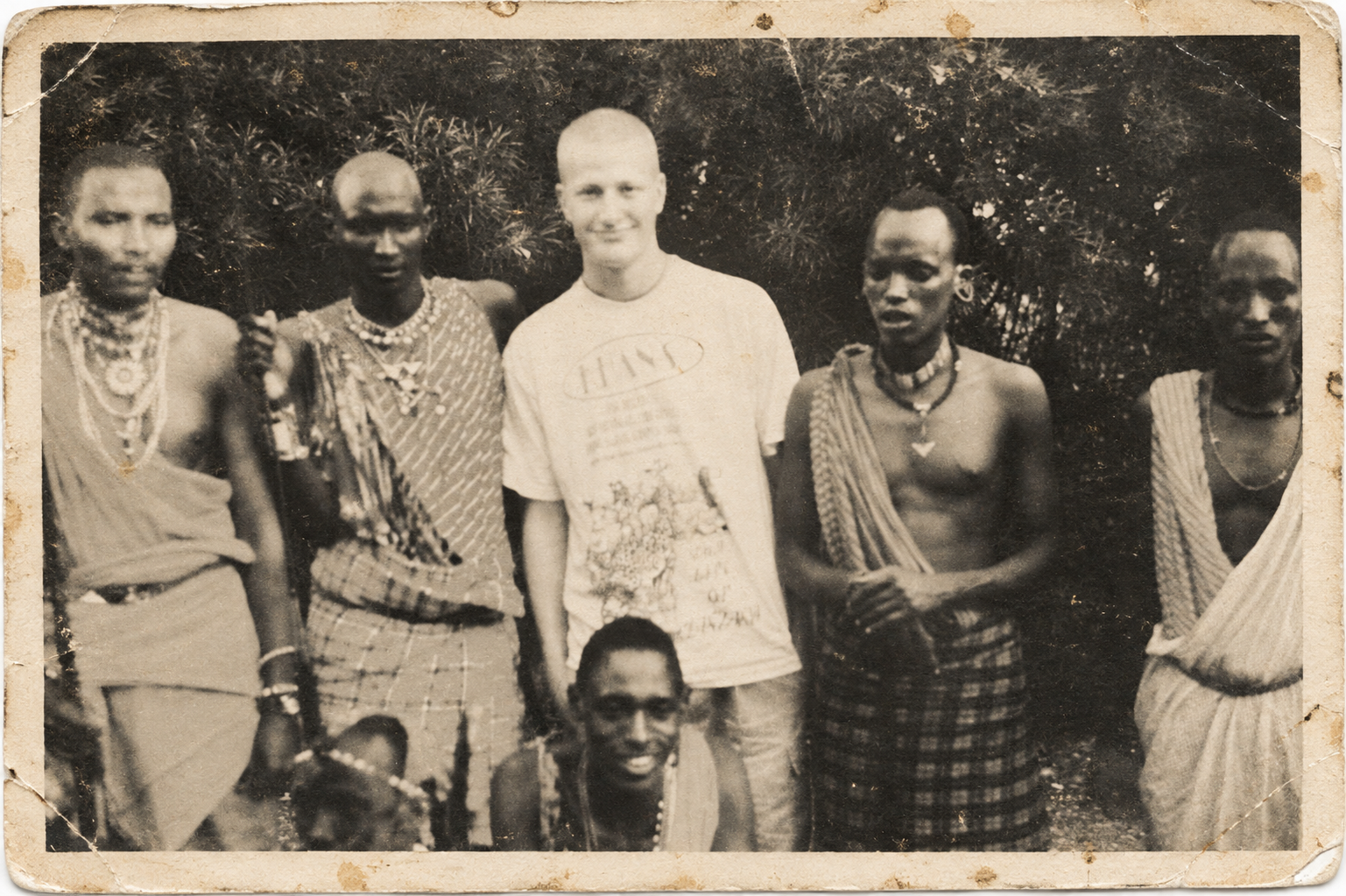
It was on one of these outings that my dear friend Amos and I were entrusted to a delightful Maasai family. Being soft, largely ill-informed, and linguistically challenged, we were paired with our exact opposite — a youthful Maasai warrior with the heart of a lion, and very basic, but respectable command of English.
To our untrained ears, we understood our guide's name to be Into Mama. No doubt this was a misnomer, but we shamelessly persisted with our incorrectness for the duration of our time with our new big brother. Again, I must reiterate, I am well aware of the fact that I am not a shining beacon of cultural sensitivity in this story.
In the not-so-distant past, Into Mama had passed through the Maasai rite of circumcision. The basics of which consist of several days of quarantine, lots of singing, a processional of sorts, and a visit to see the local circumcisionist, who would then perform the necessary adjustments to the anatomies of the young men in question.
For Into Mama, the fact that he neither flinched nor cried out in pain while amidst his rite was a regular topic of conversation during our brief tenure together. "I was a stone," he would say. And I believed him. Stoicism throughout the process of circumcisonment is the mark of an individual who had not shamed himself or his family. Into Mama had proven his mettle while under the knife.
Throughout the week we accompanied Into Mama as he went about his daily routine. We herded cattle, sat with other warriors, drank tea, walked around, drank tea, and then rested our walked-around selves with cups of tea.
All the while we dispassionately watched our female classmates as they mixed cow dung and mud to fix houses, carried Jerry's cans of water, fetched firewood, took care of children, and performed any number of physically and mentally strenuous tasks. Not being one to challenge the cultural norms of my host family, I enjoyed the lack of strain and washed it down with mug after mug of delicious milk and sugar-laden goodness.
Despite the laxity of our stay, to say that the Maasai live a demanding life would be a gross understatement. The environment alone is brutal, and the men are diligent and industrious in their own way.
There is a reason why many of the world's top marathon runners are Maasai. Their ability to manage pain is baked in under the equatorial sun at an early age. Extraordinarily thin at the wrist and ankles, it has been argued that Maasai have less weight at their extremities, making their strides long and smooth. They are built to travel, and as a historically nomadic people, travel is quite literally in their bones.
Comparatively, my chum Amos and I were doughy and unused to the billowing flow of dust that consumes their landscape.
Dust. The kind that coats your teeth and eyelashes was beautiful to watch as we sat sipping scalding cups and watching Into Mama's cattle shuffle between patches of sun-scorched grass.
Drought. The enemy of the Maasai, weighed heavily in this community. Years when the rains come, the cattle are fat, and the families are wealthy and prosperous. This was not one of those years.
For many Maasai, cattle are their source of nutrition, savings, inheritance, and pride. Into Mama was a dedicated herdsman, and we watched him as he watched the hips and ribs of his cattle roll around in their thinning hides. His smile was pinched as he observed them, but his hospitality never wavered. To have guests was an honor. And our host was honorable.
Just to be in that place, stretched and reset at every threshold I had known. I perceived my survival as a tangible achievement. To reach the end of a day was a milestone to celebrate, but for Into Mama, it was just another Tuesday. Each night, restless dreams would overtake me as soon as my eyes closed. My threshold was set, and its violation would come most acutely in the night.
A traditional Maasai home is built with materials on hand. Mud, cow dung, and sticks are ingeniously used to make low, thick-walled, adobe-like homes that retain heat at night and insulate from the sun during the day. Airflow in traditional Maasai homes comes through small fist-sized holes cut through the walls. A fire is kept smoldering twenty-four hours a day to keep out pests and provide a place to cook. The inside of a typical home has a low ceiling, which one walks bent at the waist and knees to move about in, and is divided into cubby-like bedrooms, all of which open to a central living area. Each room and the central gathering area of our temporary home measured roughly six feet by six feet.
The beds were a mat of finger-thick sticks woven together roughly ten inches off the ground. It offered a place off the dirt floor, but little in the way of western comfort.
As I entered Into Mama's home for the first time, the contrast of daylight to nearly pitch-black was unsettling, and was compounded by the ever-present smoke from the fire. I shut my eyes to protect them from the heat and smoke, not that having them open would have helped me see in the darkness.
I fumbled my way to the edge of the bed facing the fire, where I somewhat acclimatized to the indoors. After a few minutes of acclimatizing, I was able to open my eyes. The embers from the fire gave the only light in the house.
I was grateful for the dark. Hiding myself in the shadows offset the exhaustion that ground heavily into my bones. Immediately across the fire, at our knees, I watched the shape of a woman sit quietly preparing ugali and sukuma wiki. Introductions were made, and Into Mama left us in the care of his mother for the night.
Smiles, quiet thank-yous, and fits of coughing on woodsmoke were the only interruptions that broke the silence.
We ate in uncomfortable silence and then, without as much as a goodnight, Into Mama's mother gathered her legs and disappeared into the darkness of her bed mere feet from our own.
While fighting to fall asleep, I quietly rehearsed the advice I had been given by a veteran of staying with the Maasai. He told me that if I was to feel anything crawling on my body during the night, I was to remain calm, then move quickly, using a grab-and-throw motion to dislodge the intruder. Not a grab-and-crush motion. Given the snakes, insects, and other varmints I'd seen in my previous travels to the area, I acknowledged the fact that attempting to squash any of the above would undoubtedly prove more harmful to myself than to any nocturnal guest.
The stroll down criss-crossing paths of exhaustion, the thought of a scorpion crawling across my face, and periodic fits of coughing eventually met at a crossroads of fitful sleep.
Hours or possibly minutes later, I awoke, unable to breathe through the smoldering ash, and thrust my face toward the small opening in the wall of our cubby, only to find it occupied by Amos, who had beaten me to the punch. We spent the following hours navigating sleep and waiting our turn to press our faces to the hole in the wall to gasp for clean air. From the outside of the home, it might have looked like two red-faced twins fighting to see who would triumph and be born by morning. And the truth is, neither of us won. We passed the night minute by minute until we gave up and emerged, gulping the pre-dawn air into our lungs.
Haggard and bleary-eyed, Into Mama appeared, wished us a good morning, and we began another day.
Days passed in a swirl of dust. Time dissolved like sugar into tea. We learned by being. Not by reading or speaking. We attended a community gathering and watched as children played, women worked, and men sipped tea. One particularly well-endowed older gentleman sat with his red Maasai blanket rakishly tossed about his shoulders, leaving nothing of his anatomical configuration to the imagination. Unashamed, his position in the community was ensured by his age.
With a wave of his hand, he gestured to a hillside of children and spoke three short sentences which were translated to us by Into Mama.
"You see all the children there?" "They are all mine." "I am a machine."
A goat was slaughtered. Warriors bent low and drank blood from a flap of skin separated from the flesh at the animal's neck.
The elders, including the scantily clad grandpa we had met earlier, were served, and then the guests. I was presented with what appeared to be the section of the goat located between the knee and ankle (do goats have knees?)
I gnawed the extremity, unsure how much chewing cartilage was necessary before swallowing. Eventually, the opportunity to deposit the leg alongside the other bones presented itself, and I seized the opportunity.
And so it went; we woke, walked, watched, and lay down once the stars were out. Our eyes seeing dim shadows in what once was pitch dark. Our lungs were beginning to sort out what to do with the dust and ash as we slept.
In reality, we had spent less than a week with Into Mama, and pretending that we had a grasp on the community around us would be a laughable overstatement. Equating acclimation with understanding is, after all, a most dangerous business and one that I am deeply suspicious of.
As our time with Into Mama was coming toward its end, he informed us that we would be walking to town — and walk we did. Four hours later we arrived at the regional hub of commerce and were deposited at the corner store, complete with glass windows and tin roof, to gulp hot orange soda and shoot the breeze with Into Mama's cousin, Joseph. Same last name. Again, any linguistic prowess the reader would afford myself and my companion would be a mistake.
Joe graciously insisted that we take photographs of himself, his friends, soda bottles, nearby livestock, and the tree that supplied his roadside shop with shade. And so, we spent the next while executing Joe's artistic vision. With fruity sugar-pop flooding our bodies with renewed energy, we dutifully photographed our director's whims for the better part of an hour.
Joe posed with a large sack of maize, and we all laughed. Joe opened a bottle of soda with his teeth, and we were horrified. Joe gruffly manhandled a panicked goat, demonstrating how it would be killed, and we all laughed. Our precious rolls of film happily flying through cameras. According to Joe, each frame of film was spent, "For remembrance."
Into Mama returned with his shopping to find a grinning pack of idiots throwing a club at a broke-down water jug. And gave his cousin a sideways glare that communicated, "You circumcision-flincher."
It was well into the afternoon, and time to leave Joe. We slapped hands, swore we would see each other again, and left Joe Mama at the corner store, never to see each other again.
Some hours later, the sun set through the haze of dust and we were called inside to dinner and a show.
Amos and I sat hip to hip on our bed and knee to knee across from Into Mama, his mother, and a special guest for the evening — Into Mama's Aunt. The day's journey had given us each an appetite worthy of a home-cooked meal, and as bowls were distributed, the waft of cooked meat was welcomed by all.
Meat. A specialty, eaten at celebrations, when times are good for the Maasai. Being that times were lean, we knew that providing us with such an extravagance was a sacrifice for our hosts, and the cut of meat spoke as much. It stands to reason that in Maasai culture, when one's cattle are fat, one is doing well and life is good.
Not by the sight of our dinner, as there was no light to speak of indoors, but rather by taste and mouthfeel, I determined that this cow was not from around here. It had obviously spent its days ambling its portly body through snout-high waves of dewy green. The heavy bowls steaming in our laps were brimming with good-times meat.
Down it went. Each bite was a balancing act: chewing enough not to choke, and fast enough to limit the time spent contemplating the squish of the rubbery bits. The understanding between my counterpart and I was clear. We had to finish our helpings so as not to offend our hosts. And yet, there was danger in finishing, as an empty bowl also signifies an appetite for more.
As this thought was casually thrashing in my head, I felt the tell-tale tickle behind my eyes and was overcome by a most satisfying sneeze. Not an uncommon occurrence over the last couple of days, given the amount of dust I'd inhaled. I thought nothing of it until the barest trickle of something salty touched my lip. I popped another hunk of rendered animal in my mouth and squeezed away at its cooling rubberiness when I realized that I had a nosebleed.
Remaining calm, I swiped my nostril with the side of my index finger, assuming that the few drops would not cause further disruption. But as I touched the side of my hand, I was greeted by a torrent of openly flowing blood. The blood quickly coated my hand and was running fluidly over my lips, and I realized the severity of the issue at hand: mouth, chin, and shirt. Grateful for the darkness in which our dinner party was being held and not being one to make a fuss, I casually inquired of my friend if he had any toilet roll which I might use to sop the issue, and he informed me that the last of our stores had been used as intended near some poor bush a few hours previous.
I politely acquiesced to this information and, with one hand cupped under my chin to catch what of the increasing flow I could manage, I searched the darkness for what paper I had available. Feigning a cough to cover the sound of tearing paper, my journal sacrificed a handful of crisp white pages. The red flow rapidly created Rorschach tests in the dark.
I made page after page of unintended paintings, first a Jackson Pollock and eventually graduating to the solid blocks of color of Rothko. The sheets of my notebook did little to absorb the paint, but I persisted in my attempt to stem the flow of my unwitting artistic pursuit.
Silently suffering through the episode, I managed to continue the main course of my meal knowing that the cooling fat was not going to get more pleasant to eat. I twisted inch-and-a-half-long cones of notebook paper up my nose and smiled into the darkness, thinking of what a sight I would be should someone slap their forehead and remember to switch on the lights. There would sit a dim-witted teen with a surprised look on his face, half-covered in blood. Truly, it would have been a sight.
Soon the crimson cones wilted through, and I replaced them. As they continued to leak, I managed to slide a few juicy morsels down the hatch.
I found myself hoping that the distinctive smell of iron blood would go unnoticed by the other guests who had thus far happily continued conversing over the protein-rich supper. So far as I could tell, no one but Amos had any inkling of the silent bloodletting that was happening mere feet from Into Mama, his mother, and Aunt.
A little lightheaded due to the smoke and sudden loss of blood, I was vaguely aware as another guest entered the already tight quarters and greeted us. Into Mama translated the greetings and reminded us that we had met our new dinnermate on the hillside a few days before. My memory, which was now in a fog, placed him as none other than Mr. "I am a machine," the father of a hillside of children.
Mr. Machine settled into an apparently open spot next to Into Mama's Aunt in the dark, and I settled back into the battle of blood and fat.
As I twisted a fresh set of nosecones, I happened upon a particularly stubborn tendon when my attention was caught by some shuffling in the nook which now contained Auntie and Mr. Machine. In the dimmest perceptible light, my eyes were confused by a pair of upwardly turned feet pointed towards the smoldering embers and what appeared to be a downwardly turned set of feet on either side.
For propriety's sake I will spare any further details, but suffice it to say that the Mr. Machine had decided to drop by and, ahem, how shall I say this? Attempt to further populate the hillside? Yes. That will do.
And so it was. Blood flowed into notebook paper, the fat of a cow squeaked in my teeth, and the bed of sticks just feet away also squeaked. Into Mama, realizing that the grunting might be overtaking the space held for quiet conversation, decided that a traditional Maasai song might be appropriate, began serenading us with a low rhythmic tune.
With every sensory signal blowing past its maximum threshold, a moment of panic flashed through my body. I asked the my adolescent universe, “Why are you doing this to me?” — and then, I simply smiled. Blood coated teeth gleaming in the darkness, a moment of clarity washed over me. A new experience for a young person.
I believe that there are times in every person's life when it’s best to opt out of the search for why things happen. Knowing the reason why we end up in a surreal situation, with a broken heart, or a broken body, or a particularly bad day, or a great day is often not as revealing as we’d hoped.
Sometimes we end up bleeding, eating fat, listening to the elderly have sex nearby. And understanding why things are happening is less interesting, less enlightening, and less, dare I say, fun, the more they are analyzed .
So, what might the goal be? The goal should rarely be to satisfy our need to understand the why. Whys are often a cheap way to achieve, explain away, and archive something mysterious.
Enjoying the Mystery is learning to enjoy the lack of understanding, and even for one blood-soaked moment our truest pursuit should be to accept that there is no reason for why some situations happen. The thrill of experiencing the happening is the goal, while why sits content and silent in darkened corners.
And as the bleeding gives way, and as there is nothing left in the bowl besides bone shards, and as Mr. Machine gathers his garment and departs, and the last thrumming rhythms of the song fade in the night, we can be thrilled by the unknowableness of the why.
I might even say there isn't one.
•
We departed the following day, and to this one, I often think about Into Mama. I wish I knew his real name. I wish I knew how he and the family were getting along. I hope the cattle are fat, and there is a hillside of new, dusty-footed youngsters sprinting home to dinners where the adults snicker about the blood-soaked mzungu who stayed that one time. And I hope they don't spend a second wondering why we came.
